Tuesday, 3 September 2013

Holywell Helps Opendoors Unlock Hidden Oxford


Every year, around 9.5 million visitors from all over the world come to Oxford. They come to see the ancient colleges and iconic buildings, to enjoy the museums and theatres, and to immerse themselves in the culture of this unique city. For those of us who are lucky enough to live or work here, it’s easy to take the city for granted, and feel that we know it almost as well as the tour guides who, umbrellas held aloft, chaperone their groups through the busy streets.

But while there is plenty to keep the tourists busy – and a photo opportunity around every corner, some of the most interesting aspects of Oxford are out of bounds to the general public – except that is for two days each year when Oxford Preservation Trust holds the Opendoors weekend. Now in its 6th year, Opendoors aims to give people – especially locals, the opportunity to discover more about their world famous city.  The event was established by Oxford Preservation Trust, an organisation committed to preserving and enhancing the City's historic character. From small beginnings, the event is getting bigger each year, now encompassing some 180 venues and events, and attracting over 60,000 visitors.

This year, Opendoors will be held over the weekend of 14th – 15th September, and it’s a great way to discover a side of the city you would never normally see.  There are dozens of events and venues to select from, and access is free – though you will need to book for some of them. This is your chance to (among other things) go behind the scenes at the Ashmolean Museum and see works of art not normally displayed; to visit the original cells in the old city prison; look around parts of the colleges that are usually out of bounds; take guided tours with experts ̶ and generally have exclusive access to some of the hidden gems of Oxford.

Holywell has been closely involved with the Opendoors project since it first started, producing the free guide which highlights all the venues and events. In line with the success and scale of Opendoors, the guide has gradually evolved from a simple leaflet into a full colour, 40 page booklet that has a print run of 50,000. We’ve worked with the Trust  ̶  a non profit making organisation - to help them keep production costs to a minimum, and the current guide format (185mm x 140mm) is optimised for cost-effectiveness. It’s the same pocket-friendly size as another guide we produce for our customer Artweeks. The format is ideal for visitors to carry with them and use for reference as they enjoy the weekend – and it means we’re able to print it in 32 page sections, providing the most economic solution.

You might think you already know the city well, but don’t miss your opportunity to discover another side to Oxford; go to, www.oxfordopendoors.org.uk for more information on Opendoors ̶  and if you want to produce high quality materials to support your own event, make sure you talk to us first!

If you’ve found this blog useful, why not subscribe to our monthly newsletter for more – click here!

Monday, 19 August 2013

What’s Your Type? A Guide to Typefaces

Typefaces are the unsung heroes of design; they have the power to grab attention, engage a reader and enhance a message just as much as any image can. Although they may not always be consciously noticed, typefaces have the power to carry subtle undertones, in fact, they can be just as expressive as the words they create, communicating concepts like ‘traditional’, ‘classic’, ‘contemporary’, ‘modern’, ‘chic’, ‘stylish’, ‘serious’, ‘fun’, ‘bold’, ‘understated’ –  and many more besides. 

Choosing a typeface that complements the message and creative approach is only part of the story, the size, spacing and weight of each letter must be carefully balanced by the designer to achieve a perfect end result.

For this week’s blog post, the Holywell studio have put together a brief guide to typefaces, tips on using them and things to consider when selecting them - Click here to download the guide in PDF format


Tuesday, 13 August 2013

Made in Oxford: Holywell helps CTSU with Oxford-China Fellowship conference

At Holywell, we love a challenge, and some projects test our skills on a number of different levels. A recent project for our customer, the Clinical TrialsServices Unit (CTSU) is a great example, calling for a range of competences, and requiring us to coordinate and deliver a range of disparate elements.

Part of the Nuffield Department of Population Health, a major section within the Medical Sciences Division of Oxford University, CTSU’s work chiefly involves studies of the causes and treatment of “chronic” diseases such as cancer, heart attack or stroke, as well as studies of other major conditions in developed and developing countries.

Hosting the Oxford-China Fellowship Conference, an event for Chinese delegates that takes place in Oxford, CTSU briefed us to support them with a package of services which, in addition to producing the conference programme, included printing personalised certificates for delegates, framing them, and providing overprinted jute bags – all while the conference was taking place!

Production of the programmes could not begin until the full itinerary for the Oxford China Fellowship was confirmed, and details were not finalised until immediately before the event was due to take place.  Cue our digital printing press and our perfect binding machine (see lastweek’s blog post for more information) – the perfect solution when we need to create high quality, professionally bound books at very short notice. What made this project a little different for us was that the text supplied for us to create artwork was in Chinese. While the designers in our studio are a very talented bunch, none of them is a fluent Chinese speaker! Not a problem, our customer supplied a Chinese proof reader to sit with our artworker and check our typesetting before we went to press with the full colour, A4, 30 page (26 pages of text and a 4 page cover) programme.

Our next challenge was to produce training certificates for each of the conference attendees, personalised with the delegate’s name and other details. We used high quality, heavyweight (300gsm) paper and printed the certificates digitally. We also sourced wood and glass frames, hand framing each of the certificates individually. Once again, because delegate details were only able to be confirmed last minute, production was carried out while the conference was underway.

The finishing touch for our CTSU project was to supply natural fibre jute ‘goodie bags’ for all delegates. We created artwork featuring the Oxford University crest and the Oxford skyline, and oversaw the screen printing of this image onto both sides of the bags.


By their nature, events are always likely to be subject to late changes, as itineraries, speakers, presentations and attendees can alter right up until the very last moment. Here at Holywell though, our ‘can do’ attitude and our responsive approach to print production means we are used to working under pressure and delivering to extremely tight deadlines.

If you’ve found this blog useful, why not subscribe to our monthly newsletter for more – click here!

Tuesday, 6 August 2013

Perfect in the short run: Low volume, high quality books printed in hours


How often have you come out of a conference, a seminar or a training meeting clutching a set of stapled handouts run off by the presenter or event organiser?  If you were lucky, they might have even been held together with a plastic spine! Where are they now? The odds are that they stayed in your briefcase or on your desk for a few days or weeks before you filed them in the bin! It’s a sad fact that many excellent events are often let down by the quality of the materials that delegates are given to take away. For one thing, second rate material diminishes the value of the content delivered; for another, it makes it less likely that it will be retained for future reference.

Of course, the reason why handouts are often produced ‘fast and dirty’ is because content – or parts of it at least – may not be known until very close to the event – or perhaps even while it’s still taking place.  But if that’s been your excuse up until now, you can’t use it any longer, because thanks to digital printing and our perfect binding machine, we’re able to create book quality documents in a matter of hours.

The perfect binding process uses hot glue to fix pages together, and the end result is a professionally bound book or booklet that’s almost instantly dry and ready to go out of our door as soon as it comes off the machine.  Creating content pages and covers using our digital press, and then feeding these into our perfect binder, makes it possible for us to be receiving artwork in the morning, and delivering high quality books by lunchtime.

Combining digital print with perfect binding is ideal where a fast turnaround is needed, and using this production method gives us the ability to be incredibly responsive, printing virtually in real-time. But speed is not always the driver – there are plenty of other reasons why you might require low run, high quality print including:

  •           Impressive presentation documents for an important meeting.
  •               A limited run academic publication.
  •               A self-published book, printed on demand.

If you need to produce a professional looking book or document, this process is fast and cost-effective for anything from just one copy - up to a print run of several hundred. Books and booklets are usually printed in A4 or A5 format, as these are the most economic sizes for our digital press, but we can go up to a maximum size of 350mm x 350mm if required. The size of the content should not be an issue either as we can produce books up to 50mm thick.  For a really impressive document, it may be worth considering printing the cover using the lithographic (rather than digital) process. Even if the content is not going to be available to print until the last minute, covers can be litho printed and finished in advance so they are ready to go when the content is finalised. The same principle can be applied to any other elements which might be available in advance, or require special finishing; this might include diagrams, illustrations or photographs for example.


So next time you need to produce low volume, high quality documents quickly, don’t break your desktop printer or burn out the photocopier, call Holywell and do it properly. If it’s worth doing, it’s worth doing Holywell!

If you’ve found this blog useful, why not subscribe to our monthly newsletter for more – click here!


Tuesday, 16 July 2013

Don’t forget to write! Using postcards to stay in touch


Many of us will still send a postcard back to the office or to friends at home when we are away on holiday. Why choose this medium in a digital age? Well it’s effective, it’s inexpensive, and the format allows us to convey as little or as much as we like. From the recipient’s perspective, a postcard is personal, fun to receive, quick to read and demonstrates that the sender is thinking about them. What’s interesting is that all of these same attributes apply in a business context too.

With a little imagination, postcards can make a valuable contribution to your sales and marketing effort, especially when they are used alongside other online or offline communications, as part of a campaign. Over a period of time, postcards can help to build awareness, develop relationships, and ensure your brand stays front of mind.
Postcards are a very versatile communication medium - use them to distribute a series of messages over a period of time, or drip-feed a story in parts to create interest and intrigue - we’ve worked on projects involving both these routes recently:

·         A client offering a high-tech service ran a campaign using postcards designed to look like iPads. We printed a stock of cards, leaving the ‘screen’ area clear to overprint digitally with a series of messages which changed throughout the campaign. Printing all the postcard stock in one go, but overprinting messages digitally was a cost-effective way of enabling our client to tailor messages according to responses as the campaign progressed.

·         Another client made very creative use of postcards by designing a series based around a town centre street scene. While all postcards showed the same view, the scene changed progressively over the course of several mailings with shop fronts changing, lights coming on, cars moving and so on.

Summer is a great time to mail out postcards; here are a few basic things to keep in mind as you plan how to use them in your next campaign:

  • Grab attention with an eye-catching image and a strong headline
  • Be clear about why you are making contact – don’t just list your services.
  • Have a strong call to action – say clearly what you want the recipient to do next!
  • Consider using a ‘handwritten’ font to give more personality to your communication.
  • Be sure to use other communication channels in conjunction with postcards.


We’re sure you will have plenty of ideas on how you might use postcards to boost your sales and marketing, but if you’d like some help developing creative concepts; our studio is brimming with inspiration!

If you’ve found this blog useful, why not subscribe to our monthly newsletter for more – click here!

Tuesday, 9 July 2013

Client Spotlight: Holywell helps prepare high spec Hangar8 brochure for take off!


We don’t have a company jet at Holywell, but if we did (well we can dream!), we know who we’d task with looking after it for us. Headquartered at Oxford Airport, just around the corner from our own offices, our client Hangar8 specialises in chartering, managing and maintaining executive jets, and supplying pilots and air crew to a discerning, international customer base.

With more than thirty jet aircraft based around the world, Hangar 8 is
the largest aircraft operator in the UK, one of the top five in Europe, and the only publicly listed business jet operator on the London Stock Exchange.

Hangar8 delivers exceptional levels of service to demanding clientele who have high expectations, and the superior quality of their offering is reflected in all of the businesses online and offline marketing collateral. When they needed to create a corporate brochure for use at an international aviation exhibition, it was essential to carry this through and create an outstanding print piece.


When they approached us, our client already had a stylish design - incorporating beautiful full colour photographic imagery, but needed help and advice on the all-important refinements, materials and finishing touches that would make certain the end result would deliver their corporate message with real impact.


To ensure a truly dramatic first impression, and emphasise the premium nature of the brand, we produced the cover of the A5 brochure on a high quality, 350gsm uncoated material called Colorplan black and foil-blocked the Hangar 8 logo onto it in two colours. The visual effect is simple and striking, conveying far more about the brand than words could ever do.


For the main pages of the brochure, we selected a 200gsm silk card, and in order to really show off the iconic images to their full effect, applied a matt varnish throughout.

To complete the elegant look and feel, the brochure was Perfect Bound in-house on our BQ270 binder; this also enabled the text to be 10 pages - a saddle-stitched brochure would have to be multiples, of 4 pages or include a fold-out leaf.

We also printed business cards for staff representing Hangar8 at the show. In keeping with the understated theme, the business cards also featured a foil-blocked logo, and a selection of the brochure images were reproduced on the reverse.

All in all, this was an Executive Class project if we do say so ourselves!

If you’ve found this blog useful, why not subscribe to our monthly newsletter for more – click here!

Tuesday, 2 July 2013

A simple card trick to bring you more business!

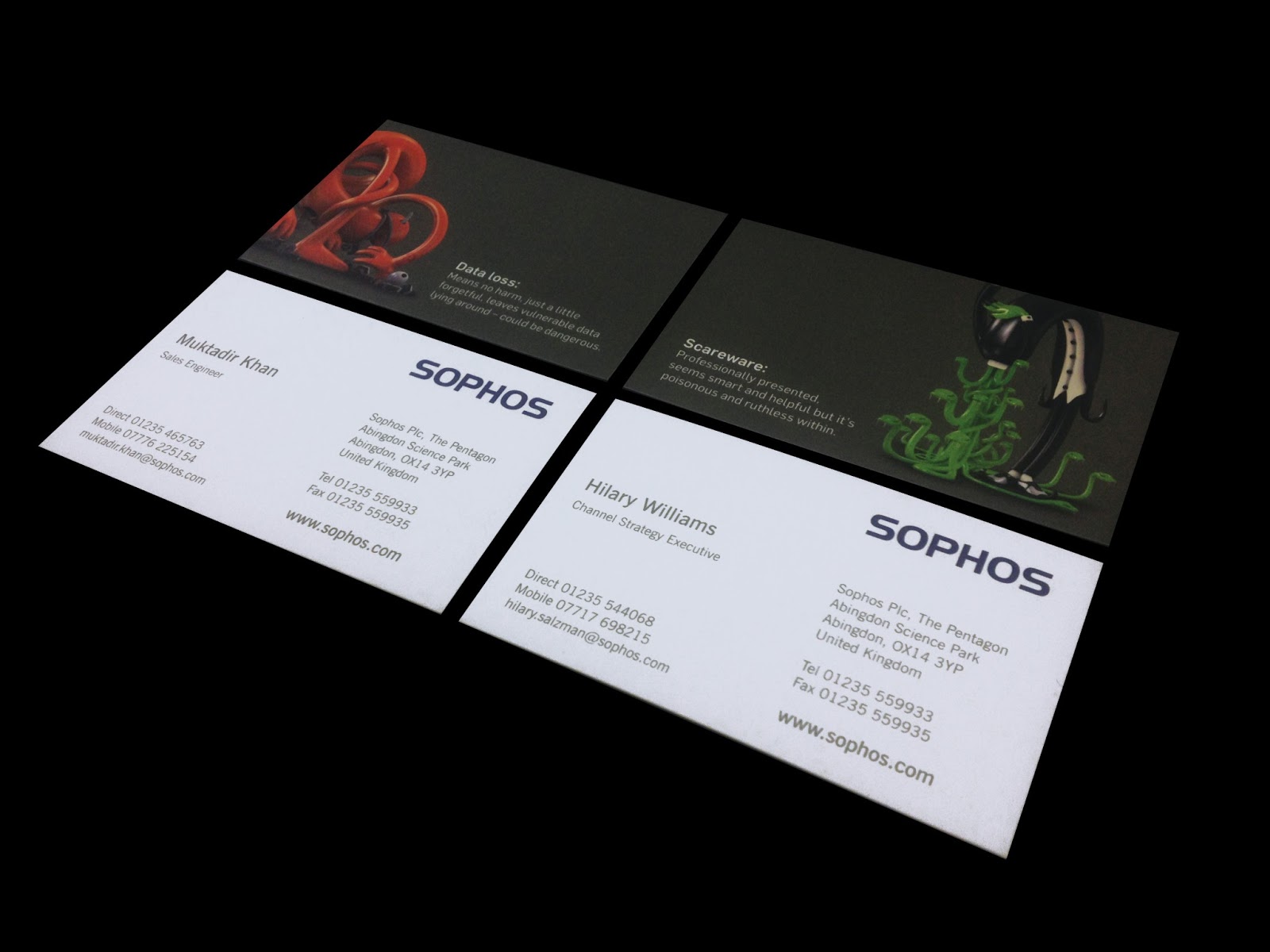
Even in a world packed with high-tech communication gadgets, the role of the traditional business card remains as important as ever, and no introductory meeting is complete without the ritual exchange of these humble business tools. The history of business cards and the etiquette around them can be traced back to 17th century Europe, where they were used to announce the arrival of prosperous merchants and aristocrats.  As a way of quickly conveying who you are, what you do and how you can be contacted, they are a simple and effective solution which has still not been bettered.

As an investment, your business cards will be a drop in the ocean compared to other sales and marketing tools such as your website or corporate brochure, but it’s not an exaggeration to say that they have the potential to win – or lose you business. Your card will probably be your first opportunity to make an impression and to demonstrate the values of your organisation - and when your face to face meeting is finished, your card will hopefully ensure your business stays front of mind.

So are your cards working as hard as they should to promote your business? If you want to maximise their impact, there are 3 key areas to consider; design, material and functionality:

Design
Within reason, the scope for creativity is limitless, so it makes sense to engage an imaginative designer who will help you to make the most of the space available.  Why confine yourself to just two sides?  Folding business cards can give you loads of extra space to communicate additional information. There are a wide variety of configurations - see Functionality below for ideas of how to use this extra area. You might also like to consider shaping your card to reflect the nature of your business – a light bulb for an electrician, a PC screen for a computer engineer and so on. Whatever design options you choose though, it’s a good idea to stay close to the regular, credit card size – there is nothing more annoying than a business card that doesn’t fit into a standard wallet!

Material
Before reading a card, you have to hold it, and the material you use can help you make a real statement about yourself. Many of the cards we produce at Holywell are printed onto a smooth board, and then laminated both sides for a clean, professional look, but for organisations seeking a more tactile card, there is a wide selection of material to choose from.

An uncoated card can give a sophisticated look and feel – especially where there is little ink coverage, allowing the surface area to be shown off. Using different coloured boards can create a really interesting effect too, with endless options for mixing inks and cards of different colours - and if you choose Duplex – a material made from two boards of different colours fixed together – you double the possibilities!

Functionality
When it comes to additional uses you can put your cards to, your imagination is your only limiting factor. Here are a few ideas for starters:

  • Promotions - Promote special offers and discounts. Have your card double up as a loyalty card. Print a QR (Quick Response) code onto your card to take customers straight to a landing page on your website. 
  • Appointment cards - Give clients cards with an area for recording appointments so they will never miss a meeting, and will always have your details to hand.
  • Price Lists - Listing prices for services will help ensure your card is retained for easy reference.
  • Portfolio - Display images of your products, or examples of your work. Create a set of cards with different images.

Have we got you thinking? Next time your business cards are due for a reprint, why not take a little time to consider how you can extend their use and get more business from them? Our studio will be very pleased to work with you and help give you some ideas.

If you’ve found this blog useful, why not subscribe to our monthly newsletter for more – click here!